
Moving to Taiwan didn’t make me fluent: What I’d tell my younger self after 6 years of learning Chinese
TLDR:
- Grind to 500 words with Anki before bothering with anything else (immersion, TV)
- Walk while doing flashcards to study longer
- Study before sleeping or after waking up
- After 500 words, use a graded reader app
- A bit every day beats a lot all at once
- Learn characters from the start
Read on for the full story of how I learned this the hard way.
My dad is Chinese, so growing up I learned basic phrases you’d teach kids (吃飽了, 屁股, and 我沒有錢) but otherwise spoke only French and English at home. I did weekend Chinese classes for a bit but was a bad student. (What kid wants to study Chinese on weekends?) Then I didn’t touch Chinese for over a decade.
False start
I took 8 months of beginner Chinese in university. After graduating, I got an online tutor and picked the Basic Business Chinese textbook (BBC lol) because I wanted a challenge. That was a mistake since the vocabulary was boring and useless outside of work. I was busy with a new job and barely studied between classes so progress was slow. My goal was speaking, so I didn’t learn characters. After 6 months, I paused for a one-week vacation. That pause never ended.
Moving to Taiwan
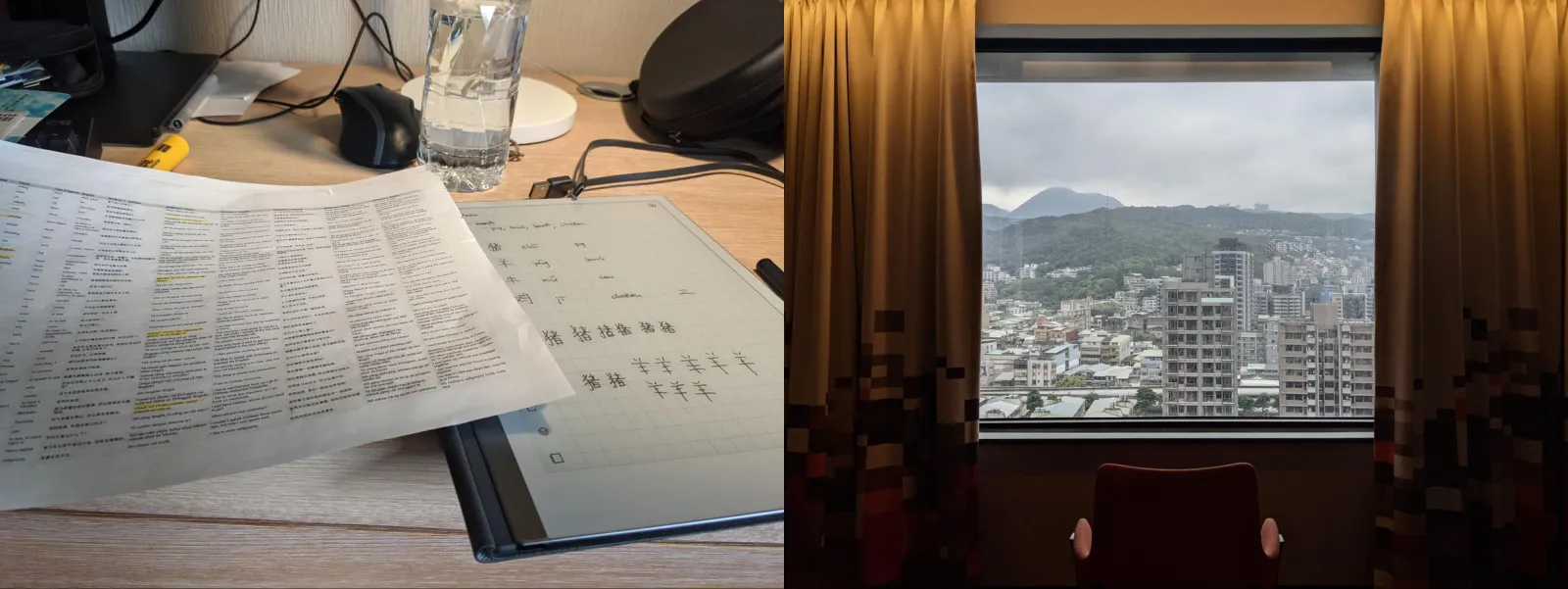
During COVID four years later I moved to Taiwan, starting with a 15-day hotel quarantine. I spent hours a day memorizing printed HSK 1–2 vocab tables and watched almost all 46 episodes of the Chinese drama All is Well. I probably learned less than 10 words from watching the drama since it was beyond my level… but at least it helped pass the time.
You’d think living in Taiwan would speed up my learning, but it didn’t. Some people learn by chatting with strangers, but that’s not me. I’m more on the reserved side, and with my limited vocabulary I’d hit a wall after a couple sentences. Most of the friends I made spoke English and my work (remote) was in English, so sometimes weeks went by where the only Chinese I used was 謝謝 and 買單.
I restarted online lessons, and progress was better since I studied between classes. After 6 months, work became too busy so I paused again.
Inflection point #1: Anki
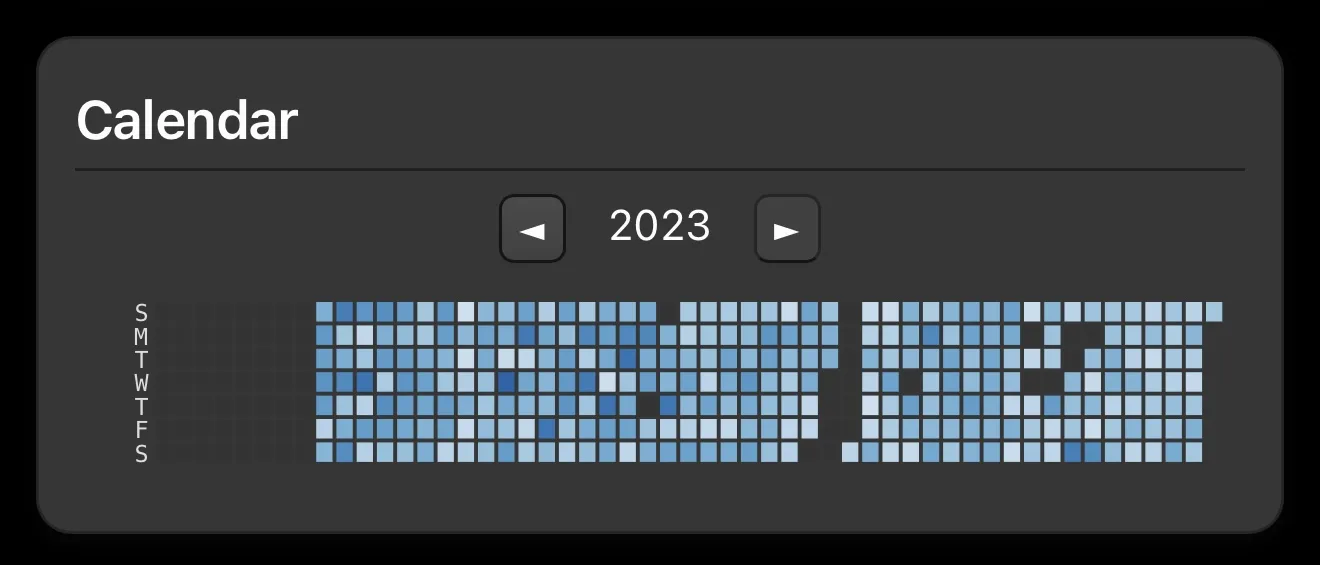
A year later I finally discovered Anki, and it changed everything. I loved that I could study anywhere, even a few cards while waiting in line. I grinded 30–90 minutes a day and kept it up for a year. I found that doing flashcards while walking allowed me to study longer without getting distracted. I also found that I’d remember better if I studied just before sleeping or waking up. My vocabulary grew dramatically.
This is also when I started learning characters, and I found that understanding radicals made it easier to remember characters.
I was proud of my streaks, which motivated me to keep going.
Inflection point #2: graded readers
Another year later I found Du Chinese. It allowed me to apply the vocabulary I spent so long cultivating. It was such a gamechanger compared to reading from textbooks: it’s so much easier to look up words by tapping a word than flipping through dozens of pages to find the definition. It also took the work out of manually maintaining an Anki deck.
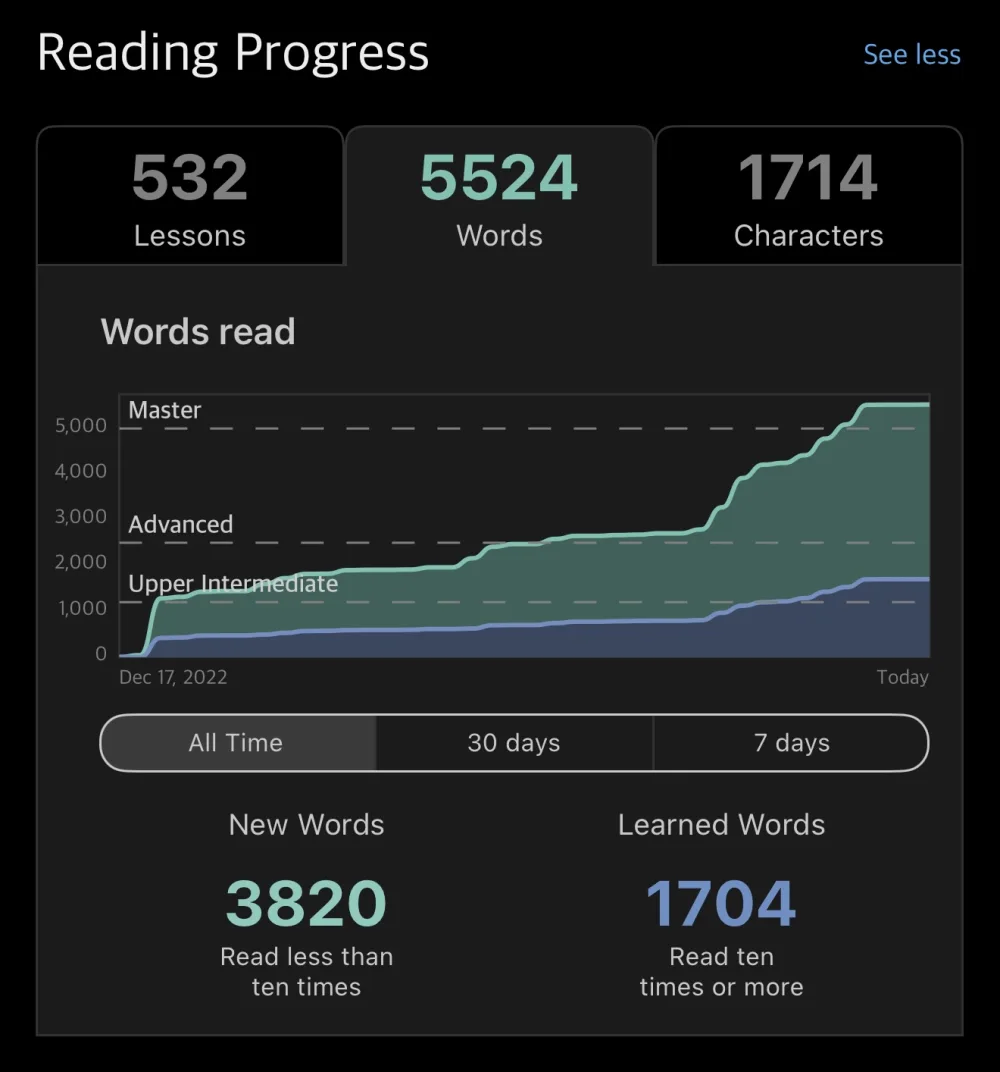
Everyone learns differently, and for me reading is by far the most effective. I’ve been reading for close to 4 years now, and have reached an HSK 5 level.
Eventually I ran out of interesting content on Du Chinese. I loved the interface, but wanted to BYOB (bring your own books). So I built my own reader, Tung Chinese. These days I read custom content by either pasting, scanning, or generating it. I just finished reading an abridged HSK 4 version of the Red Rising series, and I’ve started an abridged HSK 5 version of The Hitchhiker’s Guide to the Galaxy.
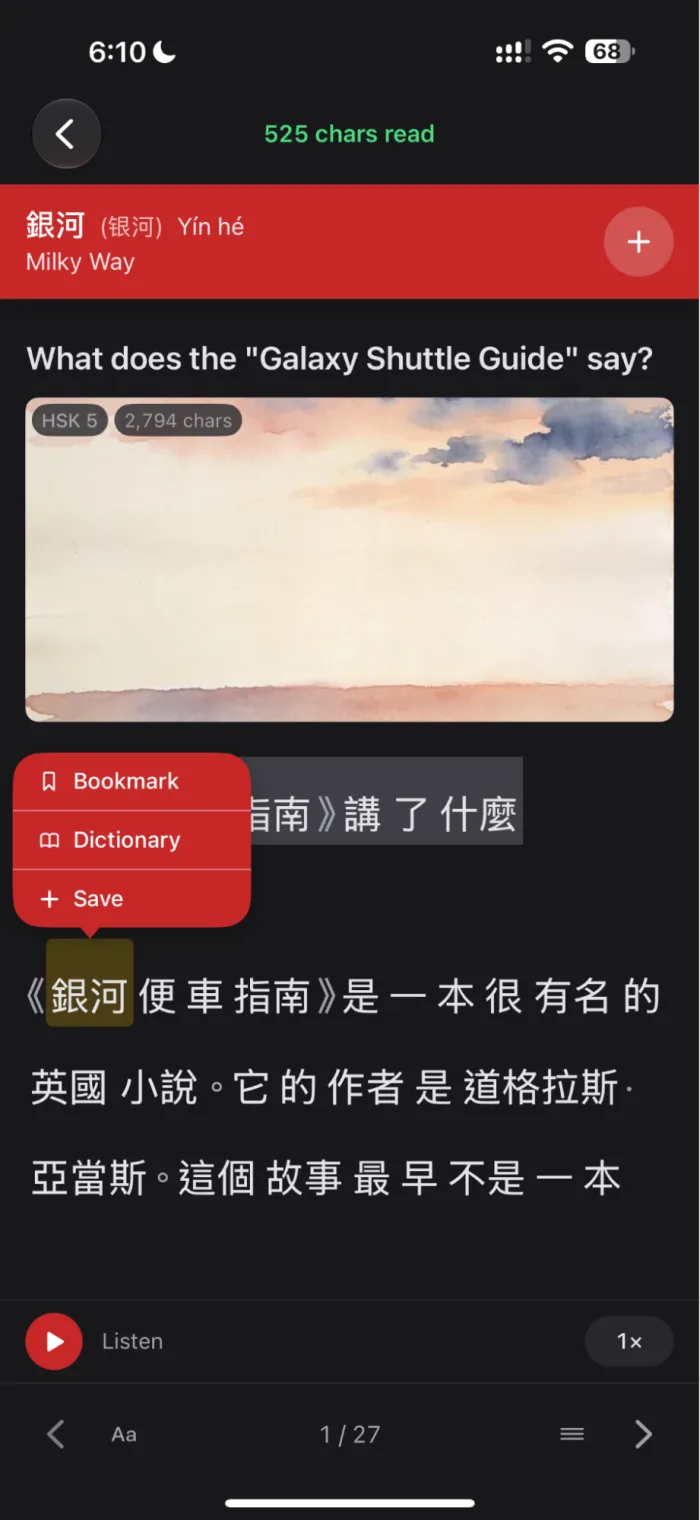
I’ve been reading more than ever now that I have unbounded access to content that’s both at my level and actually interests me.
What didn’t work for me
- Audio-only like podcasts or AI voice mode. Without seeing characters, words don’t stick.
- Difficult content. Whether it’s reading or TV, if it’s too hard, most of it goes over my head and I can’t stay focused for long.
- Boring content.
- Tutoring before knowing 500 words. I feel more effective studying flashcards or reading.
If I could talk to my younger self, I’d tell him to go straight to Anki and grind to 500 words. Everything else, like TV, immersion and even tutors, can wait until there’s enough vocabulary for it to stick. I’d tell him to do flashcards while walking to keep going longer, and to study just before bed or after waking up. Then he should move to a graded reader. A bit every day beats a lot all at once, so study daily, even if it’s just a few cards. And learn characters from the start, even though it feels slower.
It took me years to figure out. Hopefully it’s helpful to you!